
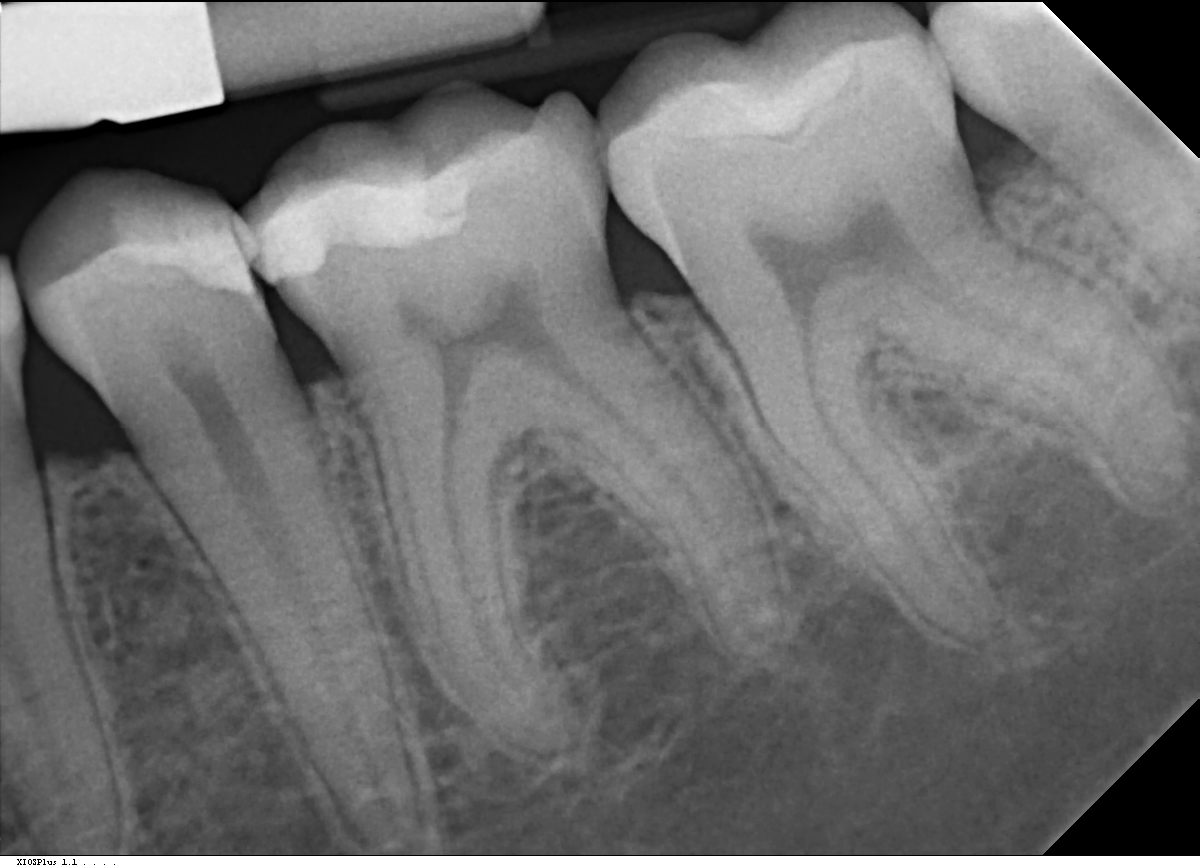
Management of Calcified Canals: Clinical Strategies in Modern Endodontics
-
May 11, 2026
Calcified canals remain one of the most technically demanding challenges in endodontic treatment. Even experienced clinicians may encounter difficulty locating, negotiating, and instrumenting canals that have undergone partial or complete calcification.
These cases test not only clinical skill, but also patience, magnification, anatomical understanding, and decision-making.
Because few moments in dentistry humble clinicians faster than confidently entering a tooth and immediately realizing the canal has apparently vanished into another dimension.
Despite the complexity, advances in magnification, ultrasonics, CBCT imaging, and modern instrumentation have significantly improved the predictability of treating calcified canals.
What Are Calcified Canals?
Calcified canals occur when hard tissue is deposited within the pulp chamber or root canal system, reducing canal space visibility and accessibility.
Calcification may present as:
- Partial canal obliteration
- Narrowed canal anatomy
- Complete radiographic disappearance of the canal
This process is commonly associated with:
- Aging
- Dental trauma
- Orthodontic movement
- Caries
- Restorative procedures
- Chronic irritation
- Pulpal degeneration
Calcific metamorphosis is particularly common after traumatic dental injuries.
Why Calcified Canals Are Challenging
The primary difficulty lies in safely locating and negotiating the original canal path without causing procedural errors.
Potential complications include:
- Perforation
- Excessive dentin removal
- Instrument separation
- Canal transportation
- Missed canals
- Loss of working length
These risks increase significantly when visibility and orientation are compromised.
Successful management requires a highly controlled and conservative approach.
The Importance of Preoperative Assessment
Clinical Examination
A thorough clinical evaluation is essential before initiating treatment.
Clinicians should assess:
- Tooth discoloration
- History of trauma
- Existing restorations
- Symptoms
- Pulpal status
- Periodontal condition
Teeth with calcified canals are often asymptomatic, although apical pathology may still develop.
Radiographic Evaluation
Traditional periapical radiographs remain important but may not adequately reveal canal anatomy in calcified cases.
This is where CBCT becomes particularly valuable.
CBCT in Calcified Canal Management
CBCT imaging can provide:
- Three-dimensional canal localization
- Canal trajectory analysis
- Remaining canal space identification
- Root thickness evaluation
- Safer treatment planning
In difficult calcified cases, CBCT often transforms uncertainty into a manageable clinical roadmap.
Without it, clinicians occasionally end up performing highly educated archaeological excavation inside a molar.
Access Cavity Design: Precision Matters
Conservative access preparation is important, but insufficient access is a common cause of failure in calcified cases.
The access cavity should provide:
- Straight-line visualization
- Controlled ultrasonic access
- Adequate illumination
- Instrument stability
Modern endodontics increasingly emphasizes directed dentin removal rather than aggressive excavation.
The goal is not to remove more tooth structure.
The goal is to remove the correct tooth structure.
Magnification and Illumination
Dental Operating Microscope
The operating microscope is one of the most valuable tools in calcified canal management.
Benefits include:
- Enhanced visualization
- Detection of color differences
- Improved anatomical orientation
- Safer dentin removal
- Better identification of calcified pathways
Microscopic visualization allows clinicians to detect subtle landmarks often invisible to the naked eye.
Identifying Anatomical Clues
Even heavily calcified teeth often retain anatomical indicators such as:
- Developmental grooves
- Pulp chamber floor color changes
- Dentin map lines
- Symmetry relationships
Careful observation of these features significantly improves canal localization.
Experienced endodontists often appear strangely calm while staring silently into a microscope for twenty minutes. This is usually because they are searching for microscopic color changes that determine whether the case succeeds or emotionally collapses.
Ultrasonic Tips in Calcified Canal Negotiation
Ultrasonics play a central role in modern calcified canal management.
Advantages of Ultrasonics
- Conservative dentin removal
- Improved precision
- Enhanced tactile control
- Better visibility under magnification
- Reduced perforation risk
Ultrasonic tips allow clinicians to trough carefully along expected canal pathways while preserving surrounding tooth structure.
This technique is far safer than aggressive bur penetration.
Canal Negotiation Strategies
Once the canal is located, negotiation becomes the next major challenge.
Small Hand Files
Initial negotiation is typically performed using:
- #6 K-files
- #8 K-files
- #10 K-files
Pre-curved stainless steel files are particularly valuable for exploring narrow canal spaces.
Lubrication and Chelating Agents
Chelating agents such as EDTA can assist in negotiating calcified canals by softening inorganic debris and improving file progression.
Lubrication reduces:
- Instrument stress
- Binding
- File separation risk
Patience is critical.
Forcing instruments apically in calcified canals rarely ends heroically.
Glide Path Preparation
Establishing a secure glide path is essential before rotary instrumentation.
Why Glide Paths Matter
A proper glide path:
- Reduces torsional stress
- Improves rotary safety
- Minimizes transportation
- Enhances canal centering
In calcified canals, glide path development should proceed gradually and conservatively.
Skipping this step is one of the fastest ways to donate a broken file permanently to the tooth.
Rotary Instrumentation in Calcified Canals
Once negotiation is achieved, rotary instrumentation must remain conservative.
Recommended Principles
- Use flexible NiTi instruments
- Avoid excessive apical pressure
- Maintain irrigation throughout
- Frequently recapitulate
- Confirm patency carefully
Minimally invasive shaping concepts are especially important in narrow, calcified anatomy.
Over-enlargement weakens root structure and increases fracture risk.
Irrigation Considerations
Mechanical instrumentation alone cannot adequately disinfect calcified canal systems.
Effective irrigation is critical.
Common Irrigants
- Sodium hypochlorite
- EDTA
- Chlorhexidine (selected cases)
Activation techniques such as:
- Ultrasonic activation
- Sonic activation
- Heated irrigants
can improve penetration into inaccessible anatomical areas.
When to Stop: Knowing Clinical Limits
One of the most important skills in endodontics is recognizing when continued canal searching may create more harm than benefit.
Clinicians should reconsider treatment continuation when:
- Anatomical orientation is lost
- Perforation risk becomes excessive
- Remaining dentin becomes dangerously thin
- Canal localization remains uncertain despite imaging and magnification
Referral to an endodontic specialist may be the safest option.
There is no shame in referral.
The real disaster is converting a manageable calcified canal into a decorative perforation.
Preventing Procedural Errors
Common Errors in Calcified Canal Cases
- Excessive dentin removal
- Gouging
- Perforation
- Instrument separation
- Missed anatomy
- Loss of canal path
Prevention Strategies
- Use CBCT when indicated
- Work under magnification
- Trough conservatively
- Use ultrasonics carefully
- Frequently reassess orientation
- Maintain anatomical awareness
Successful outcomes depend more on precision than speed.
The Role of Experience and Training
Calcified canal management requires:
- Anatomical knowledge
- Fine motor control
- Advanced visualization skills
- Strategic decision-making
Continuing education and hands-on training significantly improve clinician confidence and predictability in these cases.
Modern endodontics increasingly combines:
- Technology
- Magnification
- Conservative philosophy
- Evidence-based protocols
to manage complexity more safely than ever before.
The Future of Calcified Canal Treatment
Emerging technologies continue to improve treatment predictability.
Future advancements may include:
- AI-assisted canal detection
- Dynamic navigation systems
- Enhanced CBCT imaging
- Smarter ultrasonic instrumentation
- Improved minimally invasive access techniques
As technology evolves, clinicians may be able to manage calcified anatomy with even greater precision and preservation.
Final Thoughts
Calcified canals represent one of the most demanding situations in clinical endodontics.
Successful treatment depends on:
- Accurate diagnosis
- Careful treatment planning
- Magnification
- Ultrasonics
- Conservative technique
- Patience and anatomical understanding
Modern technology has dramatically improved the ability to manage these difficult cases predictably.
However, no technology replaces sound clinical judgment.
The most successful clinicians are not the ones who remove dentin aggressively in search of a canal.
They are the ones who proceed carefully enough to preserve the tooth while still finding the anatomy hidden within it.
You May Also Like

-
Aug 12, 2026
In endodontics, a subtle and seemingly insignificant finding on a periapical radiograph can sometimes completely change the diagnosis and treatment...
Get in touch
Address
300 Miwate Pvt, Ottawa, ON K1R 0E8
oapldentacademy@gmail.com